
It starts small, so small you almost respect it. A favor that feels warm. A request that sounds reasonable. A conversation that ends clean, but leaves your body tense like you just signed something you never fully read.
No threats. No shouting. Just pace. Just pressure dressed as logic, until your “yes” comes out to keep the air calm, not because you meant it..
Support arrives fast, generous, impressive. Then the invoice arrives later, quietly, inside a smile. You realize the warmth was never free..
Characters who don’t dominate loudly, they dominate socially. Status, timing, and perception do the work while everyone believes it’s their own choice.
This was never a normal interaction. It was an engineered outcome.
87.98$ 35.00$
Description
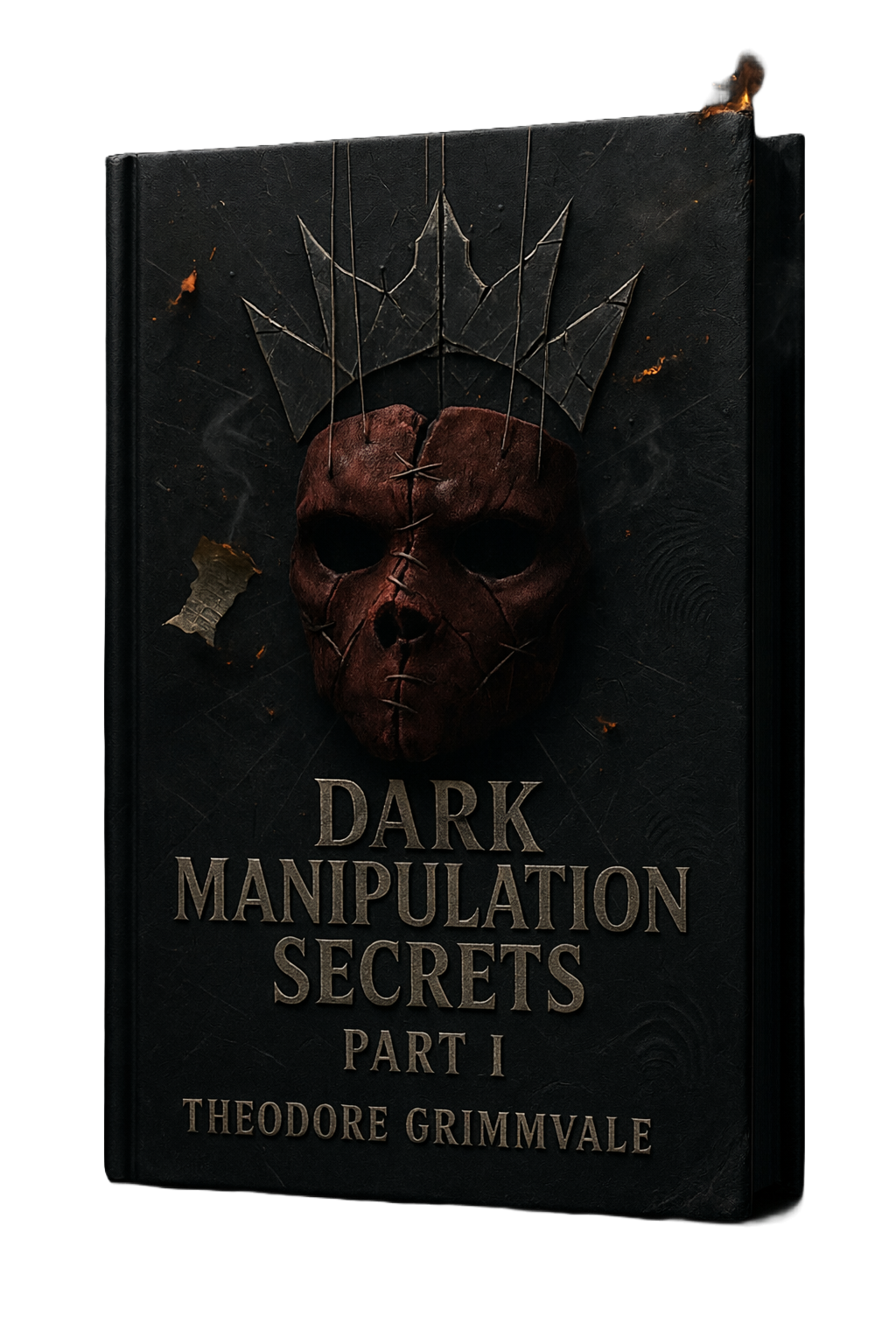
Dark Manipulation Secrets Part I by Theodore Grimmvale
What if the most dangerous control is the kind you cannot point to? It does not look like domination. It looks like normal life. A polite request. A helpful gesture. A calm voice that never technically forces anything. And yet you walk away smaller than you were five minutes ago, carrying guilt you do not understand, defending decisions that do not feel like yours. Part I is a real story told through scenes, dialogue, and escalation. It does not sell fantasy villains. It shows the everyday version of psychological control: refined, deniable, and socially invisible. The kind that hides inside “concern”, inside warmth, inside jokes, inside timing. You will follow the slow turning point where the narrator realizes something brutal:
Some people do not take power by arguing for it. They take power by arranging the room so you surrender it voluntarily.
Inside Part I, you will witness:
- How a simple favor becomes an obligation that grows teeth
- How pace and urgency steal your ability to think
- How kindness becomes leverage, then becomes debt
- How framing turns your own words into a trap
- How boundaries are tested in “small” ways that are easy to deny
- How confusion is created on purpose, so compliance feels like peace
Part I ends when the pattern becomes impossible to ignore.
Not because the manipulator slips. Because the narrator finally sees the design.
